What is Product Engineering ?
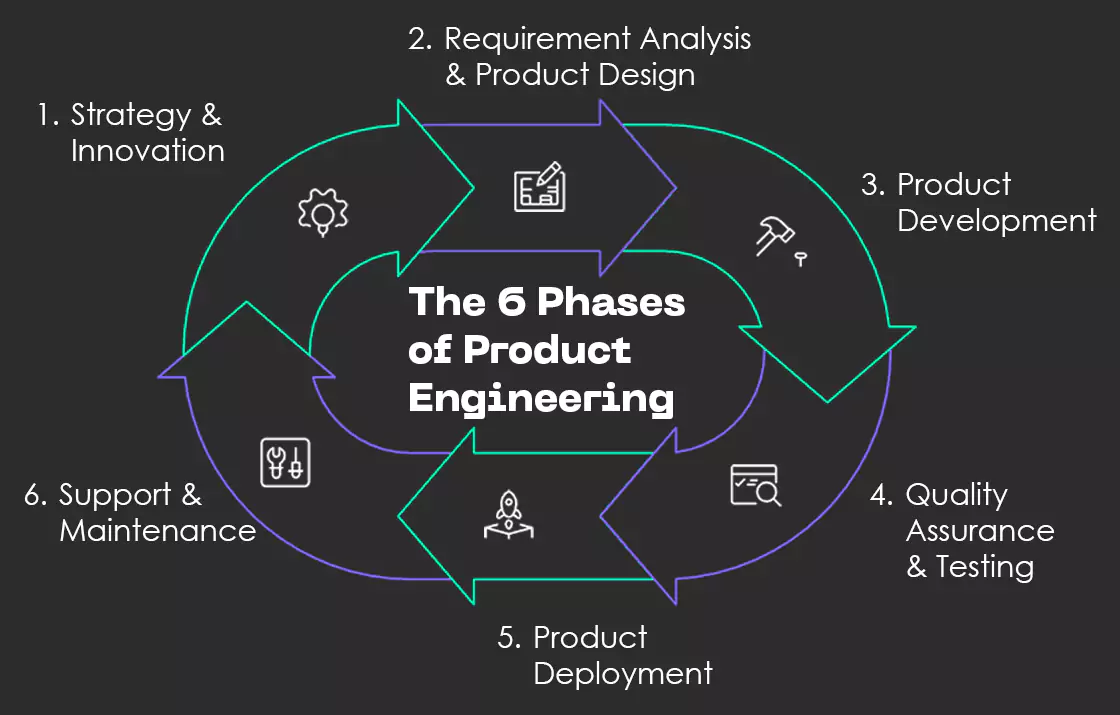
Product engineering is the end-to-end process of building a product. It starts from an idea and continues till the product is launched and improved over time. It is not only about coding. It also includes design, testing, deployment, and regular updates based on user feedback.
Product engineering is the end-to-end process of building a product. It starts from an idea and continues till the product is launched and improved over time. It is not only about coding. It also includes design, testing, deployment, and regular updates based on user feedback.
Why Product Engineering Matters ?
Good product engineering helps:
Key Roles in Product Engineering
Product engineering becomes more effective when teams follow certain best practices. Building and releasing the product in small stages helps test ideas early and reduce risks. Teams should focus on the right performance and user metrics to understand how the product is working. Close collaboration between engineering, design, and business teams ensures better decision-making. Maintaining proper documentation helps track processes and changes. Continuous improvement through regular updates and user feedback keeps the product relevant and high quality.
Where Product Engineering Is Used
Product engineering is used in many industries, especially in:
Good product engineering helps:
- Build products that solve real user problems
- Improve product quality and performance
- Reduce time to market
- Keep costs under control
- Support continuous innovation
- Ideation: Generating product ideas based on market and user needs.
- Research & Analysis: Studying users, market trends, and feasibility.
- Design & Prototyping: Creating product designs and early prototypes.
- Development: Building the product by writing code and integrating features.
- Testing & Deployment: Testing the product for quality and releasing it to users.
- Maintenance & Improvement: Fixing issues and improving the product using feedback.
Key Roles in Product Engineering
- Product Manager: Defines the product vision and goals, coordinates the team, and communicates with stakeholders to ensure the product meets business and user needs.
- Software Engineers: Write the code, build product features, and ensure the technical quality and performance of the product.
- Quality Assurance (QA) Engineers: Test the product, identify and report bugs, and ensure the product is stable and ready for release.
- User Researchers: Study user behaviour and provide insights that help improve product design and user experience.
- Automation Engineers: Automate repetitive testing tasks to improve testing efficiency and reduce manual effort.
- Scrum Masters: Facilitate teamwork and ensure that Agile processes are followed smoothly throughout the development cycle.
Product engineering becomes more effective when teams follow certain best practices. Building and releasing the product in small stages helps test ideas early and reduce risks. Teams should focus on the right performance and user metrics to understand how the product is working. Close collaboration between engineering, design, and business teams ensures better decision-making. Maintaining proper documentation helps track processes and changes. Continuous improvement through regular updates and user feedback keeps the product relevant and high quality.
Where Product Engineering Is Used
Product engineering is used in many industries, especially in:
- Healthcare software
- Financial technology (FinTech)
- Retail and e-commerce
- Digital platforms
- Enterprise software solutions
Benefits of Good Product Engineering
When product engineering is done properly, it results in high-quality products, faster time to market, better customer satisfaction, efficient teamwork, and lower long-term costs.
When product engineering is done properly, it results in high-quality products, faster time to market, better customer satisfaction, efficient teamwork, and lower long-term costs.


No comments:
Post a Comment