Sunday, December 28, 2025

Virtualization vs Cloud Computing: What's the Difference?


What is Virtualization?

Virtualization is a technology that allows a single physical machine to run multiple virtual machines (VMs) using software called a hypervisor. Each virtual machine works like an independent system with its own operating system and applications. The main goal of virtualization is to use hardware resources efficiently.

What is Cloud Computing?

Cloud computing is a service model that provides computing resources such as servers, storage, databases, and applications over the internet. Users can access these resources on demand without owning or managing physical hardware. Cloud computing uses virtualization as its base but adds flexibility, scalability, and remote access.

Key Differences Between Virtualization and Cloud Computing

  • Nature: Virtualization is a technology, while cloud computing is a service delivered over the internet.
  • Purpose: Virtualization focuses on creating virtual environments on physical hardware. Cloud computing focuses on delivering IT resources to users on demand.
  • Scalability: Virtualization has limited scalability based on hardware capacity. Cloud computing allows easy scaling up or down as needed.
  • Accessibility: Virtualized systems are usually managed internally. Cloud services can be accessed from anywhere through the internet.
  • Dependency: Cloud computing depends on virtualization, but virtualization can exist without cloud computing.

How Virtualization Supports Cloud Computing

Virtualization forms the foundation of cloud computing by enabling the creation of virtual servers, storage, and networks. Cloud providers use virtualization to offer shared resources to multiple users efficiently.

Virtualization and cloud computing are closely related but serve different purposes. Virtualization creates virtual systems, while cloud computing delivers those systems as scalable services. Understanding their differences helps businesses choose the right technology for their needs.

Friday, December 26, 2025

Product Engineering: Process, Roles, and Best Practices

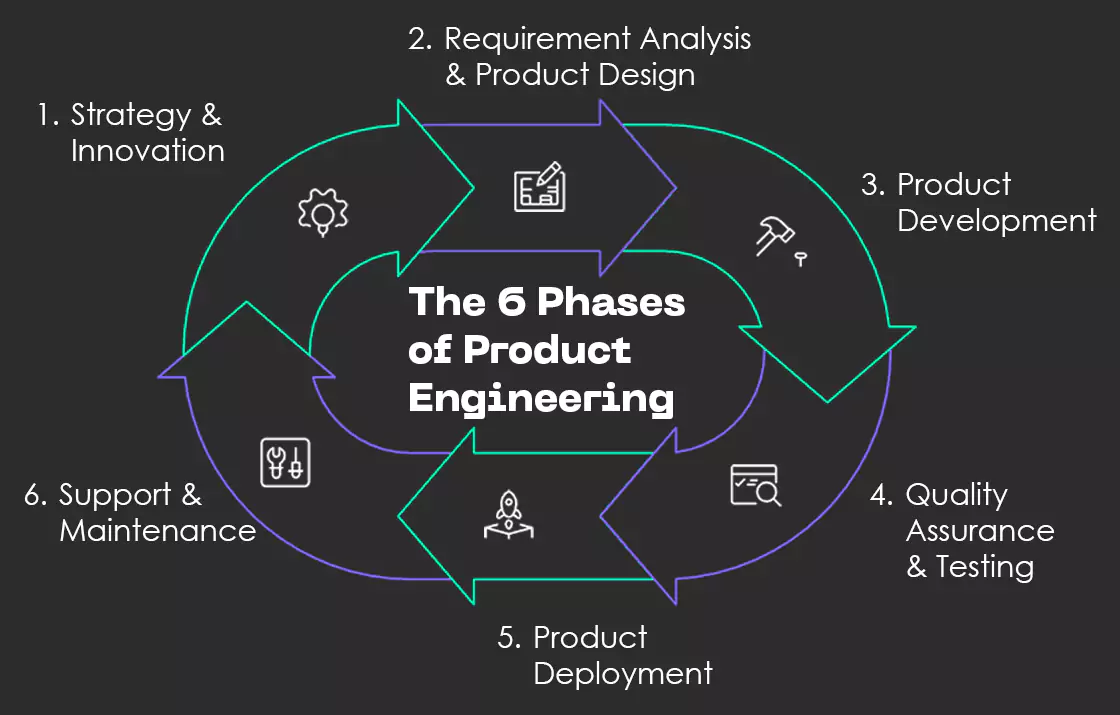
6 Phases of Product Engineering

What is Product Engineering ?
Product engineering is the end-to-end process of building a product. It starts from an idea and continues till the product is launched and improved over time. It is not only about coding. It also includes design, testing, deployment, and regular updates based on user feedback. 

Why Product Engineering Matters ?
Good product engineering helps: 
  • Build products that solve real user problems 
  • Improve product quality and performance 
  • Reduce time to market 
  • Keep costs under control 
  • Support continuous innovation 
The 6 Phases of Product Engineering: 
  1. Ideation: Generating product ideas based on market and user needs. 
  2. Research & Analysis: Studying users, market trends, and feasibility. 
  3. Design & Prototyping: Creating product designs and early prototypes. 
  4. Development: Building the product by writing code and integrating features. 
  5. Testing & Deployment: Testing the product for quality and releasing it to users. 
  6. Maintenance & Improvement: Fixing issues and improving the product using feedback. 

Key Roles in Product Engineering 
  • Product Manager: Defines the product vision and goals, coordinates the team, and communicates with stakeholders to ensure the product meets business and user needs. 
  • Software Engineers: Write the code, build product features, and ensure the technical quality and performance of the product. 
  • Quality Assurance (QA) Engineers: Test the product, identify and report bugs, and ensure the product is stable and ready for release. 
  • User Researchers: Study user behaviour and provide insights that help improve product design and user experience. 
  • Automation Engineers: Automate repetitive testing tasks to improve testing efficiency and reduce manual effort. 
  • Scrum Masters: Facilitate teamwork and ensure that Agile processes are followed smoothly throughout the development cycle. 
Best Practices (How to Work Better) 
Product engineering becomes more effective when teams follow certain best practices. Building and releasing the product in small stages helps test ideas early and reduce risks. Teams should focus on the right performance and user metrics to understand how the product is working. Close collaboration between engineering, design, and business teams ensures better decision-making. Maintaining proper documentation helps track processes and changes. Continuous improvement through regular updates and user feedback keeps the product relevant and high quality. 
 
Where Product Engineering Is Used 
Product engineering is used in many industries, especially in: 
  • Healthcare software 
  • Financial technology (FinTech) 
  • Retail and e-commerce 
  • Digital platforms 
  • Enterprise software solutions 
When product engineering is done properly, it results in high-quality products, faster time to market, better customer satisfaction, efficient teamwork, and lower long-term costs. 


Benefits of Good Product Engineering 
When product engineering is done properly, it results in high-quality products, faster time to market, better customer satisfaction, efficient teamwork, and lower long-term costs. 

What are the 5 Stages of a Design Sprint?

  What is a Design Sprint ? A design sprint is a fast and structured approach used by teams to solve problems and test ideas in a short tim...